
The charm of strolling through various rooms of your home listening to the sounds of your favourite radio station, a playlist of all the classics, a catchy summer tune, or hosting a gathering with all different genres of music seamlessly flowing through the walls, is not lost on many. This reality is no longer exclusive to the affluent; with smart home technology, multi-room, multi-source audio is becoming a widely accessible luxury for the modern homeowner.
How we listen to music has changed dramatically over the past few years, influencing the market. With so many streaming services available, we now have access to a vast array of new and classic tracks, indicating a growing emphasis on audio experiences within the home.

What is Multi-Room Audio?
Multi-room audio refers to a home audio system that allows you to play music or audio content in different rooms or zones of a house, simultaneously or independently. This technology enables users to control and distribute audio to specific areas, creating a seamless and synchronised listening experience throughout the entire home.
Key features typically include:
- Zone Control – The user can select different audio sources and control the volume independently for each room or zone.
- Centralised Control – Many systems offer a central hub or control panel, often accessible through a smartphone app, tablet, or dedicated remote. This enables the user to manage the entire multi-room audio system from one location.
- Source Options – Having various audio sources, such as streaming services, local music libraries and external devices, can be integrated into the system, providing flexibility in content choices.
- Synchronisation – The ability to synchronise audio playback across multiple rooms ensures a consistent and enjoyable listening experience throughout the house.
- Speaker Placement – Speakers are strategically placed in different rooms to optimise sound quality and coverage. Some systems offer the option to conceal speakers within walls or ceilings.
- Expandability – Multi-room audio systems are often designed to be scalable, allowing users to add more rooms or zones to the system as needed.
Getting Started
So, you are embarking on a renovation project where you are thinking of adding multi-room audio to your home? It needs to be thought out early on in the process – preferably before the first fix or, ideally, even before on-site work begins.
Several key questions that you should ask yourself at this stage:
- Is multi-room audio a top priority, or just something that you think is nice to have? Do you have a big enough budget?
- Is high-quality sound a primary concern?
- Do you prefer concealing speakers out of sight, or are you happy with speakers that are on display?
- Are you interested in a wall-mounted control, a handheld one, or both?
- Regarding multi-room audio: do you want to introduce it throughout the entire home? To most rooms? Limited to a few key rooms (such as the main living space for entertaining or bedrooms and bathrooms for relaxation)? Or are you specifically looking for a dedicated media room?
Addressing these main points will help define your priorities and guide the planning process.

Integrating a Sophisticated Audio System into your Existing Structure to Enhance the Overall Listening Experience
Assessment and Planning
Evaluate your current home layout and identify the areas where you want multi-room audio. Determine if any existing wiring or infrastructure can be utilised for the audio system.
Engage with the Professionals
Engaging with the team at JL Audio Visual, we can assess your home’s acoustic characteristics and recommend suitable solutions.
Select the Right System for your Home
Choose a system that aligns with your requirements. Consider factors such as scalability, compatibility with smart home technology, and ease of use. Decide on audio sources, such as the streaming services you will use, local music libraries, or external devices.
Wire During the Renovation Phase
Plan for the wiring during the renovation phase, if possible. If you are opting for a wireless system, ensure a robust Wi-Fi network to support seamless audio streaming.
Speaker Placement
Working with us at JL Audio Visual, we will help you place the speakers in each room to achieve optimal sound quality and coverage.
Integrate all Smart Home Features
Do you have other smart home devices? Integrate the multi-room audio system with them for seamless control and automation.
Test the Entire System
Complete a thorough test to ensure that each room functions as intended.
Learn the Basics
Get to know the basic controls and teach others how the system’s features and controls.
Enjoy the Results
Once everything is set up and tested, you can sit back and relax enjoying the enhanced audio experience throughout your renovated home.
Wireless vs. Wired
One of the initial decisions to make is where to go for a completely wireless system, opt for a wired infrastructure, or potentially choose a hybrid approach. If you’re constructing a new building or undertaking significant renovations in your home, you have a better chance to incorporate a wired infrastructure. However, in existing homes, where the installation of wiring can be more disruptive and costly, wireless technology becomes a more favourable solution.

Explore System Options
Various wireless and wired systems are available, and it’s beneficial to explore these options to determine which suits your needs. Additionally, it’s worth noting that certain wireless alternatives can be hard-wired, and some manufacturers, offer both wired and wireless audio solutions.
Sonos is an ideal multi-source solution that allows you to establish a system that can be expanded, creating distinct ‘zones’. Sonos is still the market leader in wireless multi-room audio. These distinct zones it creates can play simultaneously or be individually controlled to play in selected areas. Additionally, users have the flexibility to play different music in various rooms. Many wireless options are managed through smartphone or tablet apps.
Speakers
Say goodbye to the era of unattractive, bulky speakers with messy power cables strewn across the floor. The are numerous choices of speakers available, with some systems even allowing connection to existing speakers – the specific choice depends on various factors. For homeowners who have an eye for minimalistic interiors and a desire to keep technology concealed, built-in wall or ceiling speakers are an ideal choice. Another innovative option involves hiding speakers behind hanging artwork. On the other hand, if your plans involve relocating or adding speakers retrospectively, then freestanding speakers are becoming increasingly sleek and compact.
Considering where you place the speakers is essential. Homeowners often make a mistake by opting for low-quality in-ceiling speakers. Rooms like kitchens and bathrooms, with their abundance of hard, reflective surfaces, can pose acoustic challenges. However, for living rooms, bedrooms and similar areas, a multi-room audio approach involves utilising in-wall speakers, TV sound bars, or aesthetically pleasing bookshelf speakers.
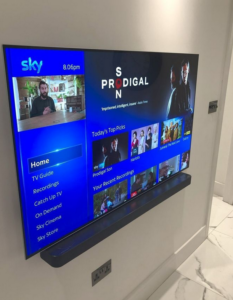 This living room in Hertford allows you to sit back and enjoy your favourite shows without the distraction of messy wires. We have hidden the wires for this TV and soundbar setup.
Integration Throughout the Home
Another crucial consideration at the beginning is whether you solely desire multi-room audio or if your goal extends to incorporating additional elements of smart home technology. This could include high-definition TV, smart lighting, security systems, and a myriad of other possibilities that smart home technology offers.
It can be quite complex when managing all the technologies through a unified control system. Use a smart home installation specialist to install the kit, and get all the technology talking, allowing for control via one device.

Contact JL Audio Visual today and let the team bring your dreams to reality in creating the ultimate multi-room audio.